



How to Match Eye Cream Packaging with Formula Stability, Application Habits, and Brand Positioning

Nous sommes une usine d'emballages cosmétiques personnalisés offrant un service complet et possédant plus de 20 ans d'expérience dans la personnalisation de tubes cosmétiques, tubes souples, tubes ABL, tubes PBL, tubes à pompe airless, tubes de gloss à lèvres et tubes de soins de la peau. PCR (recyclage post-consommation) ) Tube , etc.
The right eye cream tube balances formula protection, user convenience, and brand expression. No single material wins on all three. A mismatched tube can degrade actives, frustrate users, or blur brand image. Eye Cream Tubes therefore demand a deliberate match between structure and contents. Three pillars guide the choice: formula stability, application habits, and brand positioning. Practical constraints shape the final call—cost, minimum order quantities, lead time, and regulatory requirements. Each factor narrows the field of viable candidates. A tube that protects a fragile formula may complicate daily use. A design that signals luxury may strain the budget. The sections below examine each pillar in turn, then build a scoring framework for comparing options.
Key Takeaways
-
Start by checking your eye cream formula's sensitivity to air, light, and moisture. This step decides which tube materials can protect it.
-
Match the tube's size, opening, and cap to how people actually use the product. A comfortable design encourages daily use.
-
Choose finishes and shapes that show your brand's market position. The look and feel of the tube communicate value before anyone reads the label.
-
Consider cost, minimum order quantities, and lead times early. These practical limits shape which packaging options are realistic.
-
Test a sample with the final formula before mass production. This confirms the tube protects the product and works well for users.
Formula Stability Comes First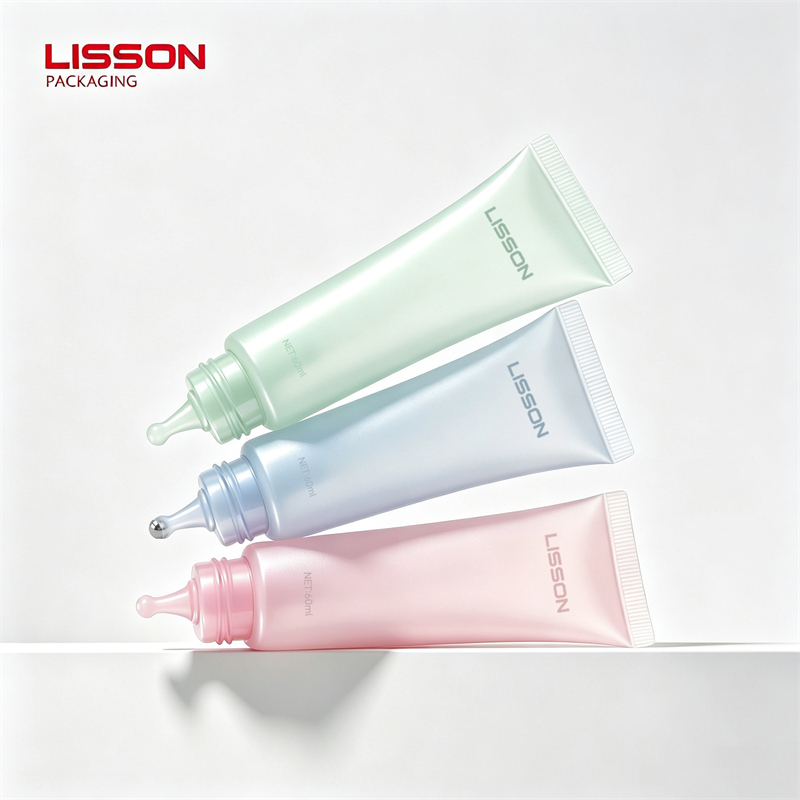
Assessing Formula Risks
Formulators begin by profiling the eye cream's vulnerabilities. Viscosity dictates whether a product flows easily from a squeeze tube or requires a piston-driven airless system. Oxygen sensitivity demands a high-barrier structure; light-sensitive actives such as retinol and vitamin C require opaque walls. Chemical compatibility matters equally—acidic formulas can react with unprotected aluminum layers, while certain oils may degrade specific plastic liners. Each risk narrows the packaging options before aesthetics ever enter the conversation. Eye Cream Tubes must therefore be evaluated against the specific formula profile, not against generic assumptions about ingredient names.
Tube Material and Structure
Single-layer plastic tubes offer economy but provide weak barriers against oxygen and moisture. Multi-layer plastic structures with EVOH layers improve protection substantially, though they remain semi-permeable. Aluminum barrier laminate (ABL) tubes and full aluminum tubes deliver the strongest defense. The table below compares the two dominant structures:
|
Barrier Property |
Aluminum Tubes |
Multi-layer Plastic Tubes |
|---|---|---|
|
Oxygen |
Complete barrier — prevents oxidation of sensitive formulas |
Semi-permeable — gases slowly pass through walls over time |
|
Light (UV) |
Complete barrier — protects light-sensitive ingredients |
Semi-permeable — light can penetrate plastic walls |
|
Moisture |
Complete barrier — keeps water-sensitive products stable |
Semi-permeable — moisture migrates through walls |
|
Microorganisms |
Reduces contamination risk via hermetic seal |
Higher contamination risk due to permeability |
|
Overall seal |
Hermetic, contents stay fresh as day of filling |
Product stability compromised over time |
The multilayer aluminum structure layers a physical aluminum barrier, a food-grade polymer coating, adhesive and seal layers, and optional external coatings. This combination keeps the product fresh, potent, and safe from filling through use. However, brands should not automatically choose ABL tubes simply because the formula contains retinol or vitamin C. The ingredient name alone does not determine packaging requirements. Concentration, formula system, sensitivity, storage conditions, and shelf life vary between products, so evaluation must consider the actual formulation and filled-package needs before confirming ABL or PBL. Zinc alloy eye cream tubes present a different challenge—their decorative weight and metallic finish require careful liner selection to prevent metal-formula interactions that could compromise stability.
For formulas requiring maximum protection, airless pump tubes offer an alternative to traditional squeeze designs. The comparison below highlights key differences:
|
Feature |
Airless Pump Tubes |
Regular Squeeze Tubes |
|---|---|---|
|
Active Ingredient Stability |
Excellent |
Good, but susceptible to oxidation |
|
Product Evacuation Rate |
~95–99% |
~70–85% |
|
Internal Hygiene |
High (no air = less contamination risk) |
Moderate (air entry can bring contaminants) |
|
Cost |
Higher |
Lower |
|
Air Exposure to Product |
None (sealed vacuum system) |
High (air enters on each squeeze) |
Airless systems suit high-value or sensitive formulas, though they carry higher component costs, may require specialized filling equipment, and demand larger minimum order quantities. Stable formulas that are not sensitive to air or light may not justify this premium. A Vibrating eye cream tube adds mechanical complexity that can stress seals during repeated use, so its barrier layers must be tested under dynamic conditions to ensure the dispensing mechanism does not introduce air pathways.
Compatibility testing remains the final gate. Brands fill production-representative packages with the final formula and store them under defined conditions. This real-time testing verifies that acidic ingredients do not migrate into internal coatings, that plastic layers withstand oil damage, and that the complete filled package—formula plus tube—passes the brand's stability validation before commercial production. A Precision Needle Nose Eye Cream Tube, for instance, must undergo the same scrutiny as any other structure, since its narrow orifice and specialized dispensing tip introduce additional contact surfaces that could interact with aggressive actives. Eye Cream Tubes with complex internal geometries demand even more rigorous validation, as every seam and joint becomes a potential failure point under prolonged storage.
Matching Eye Cream Tubes to Application Habits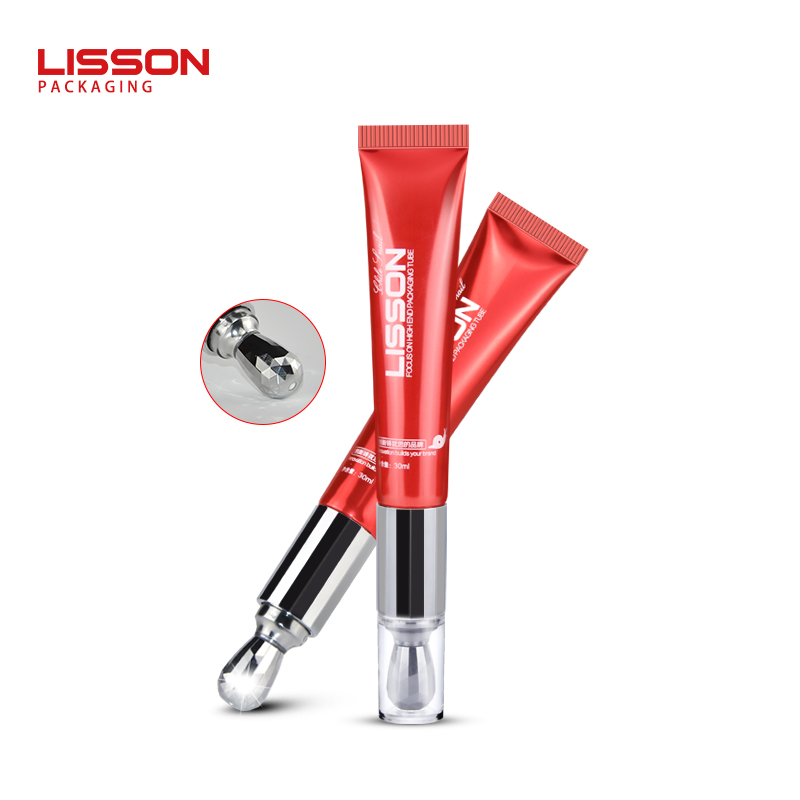
Size, Orifice, and Closure
Product texture and application area set the physical envelope. A rich cream needs a wider orifice for steady flow; a fluid serum suits a narrow opening that meters each drop. Eye-area application covers a small surface, so compact formats dominate. Common capacities run from 10 to 20 ml, with 10 ml and 20 ml sizes serving daily eye care well. A 15 ml eye cream works best in a 16 mm diameter tube, 75 mm long, with a thicker wall for protection. Diameters are customizable across 19, 25, 30, 35, 40, 45, and 50 mm options, and a fine nozzle of about 2 mm delivers precise, hygienic dosage. Small capacities also suit travel kits and sample programs, where portability matters more than volume.
Closure choice shapes both experience and preservation. Screw caps seal reliably and resist leakage, which makes them a strong travel companion. Flip-top caps open one-handed and speed up a morning routine, though a weak hinge may expose the nozzle to contaminants. Applicator caps go further. A standard nozzle applicator handles traditional creams and gels at a budget-friendly price. A metal massage applicator cools the skin, supports absorption, and signals a premium tier. Ceramic applicators offer a smooth, comfortable touch for luxury anti-aging lines. A Vibrating eye cream tube adds gentle massage through the dispensing head, and its mechanism must seal tightly so vibration does not draw air into the product.
Choose a cap style that matches your environment. If you spend time outdoors, easy access can make application more consistent and enjoyable; if you travel often or carry the product in a bag, a screw cap gives peace of mind with its leak-proof seal and durable construction.
Shape, Grip, and Hygiene
Shape affects control. An oval tube sits ergonomically in the hand and stands apart on shelf; a cylindrical tube is simpler to manufacture and handle. Textured or shaped grips prevent slipping, even with wet hands, and a squeezable body lets users evacuate the product with minimal effort. Soft-squeeze laminate construction supports effortless one-hand dispensing and stays flexible in cold conditions. The D40mm oval tube fits neatly in a bag, and its center cap releases the right amount for on-the-go use.
Hygiene ties these choices together. Precision nozzles with controlled flow reduce waste and stop leakage around the orifice, which raises perceived quality. Leak-proof sealing protects the contents and builds consumer trust. Flip-top designs limit finger contact with the cream and shorten air exposure, supporting a longer shelf life. These details decide whether Eye Cream Tubes feel effortless or clumsy in daily use, and they reward brands that study real routines before specifying a format.
Expressing Brand Positioning
Decoration and Price-Tier Signals
Decoration tells shoppers where a product sits in the market before they read a single claim. A matte finish reads as minimalist, clinical, and modern luxury. A frosted surface suggests clean beauty and a timeless mid-to-high-end position. Metallic and pearlescent effects carry a prestigious, gift-oriented feel, while spot UV and textured layers signal detail-oriented craftsmanship. The table below summarizes how each technique shapes perception.
|
Finish Technique |
Visual/Tactile Effect |
Perceived Positioning |
|---|---|---|
|
Matte Finish |
Low reflectivity, subtle sheen |
Minimalist, clinical, modern luxury |
|
Frosted Surface |
Soft diffused translucency, velvet texture |
Clean beauty, timeless, mid-to-high-end |
|
Metallic Effect & Pearlescent |
Shimmering depth, striking reflection |
Prestigious, celebratory, gift-oriented |
|
Spot UV & Textured Layers |
Targeted high-gloss contrast, tactile relief |
Detail-oriented, innovative, custom |
Soft-touch lamination reinforces this signal through feel. A velvety coating instantly elevates perceived value on shelf and helps brands justify higher retail prices. Hot foil stamping adds metallic shine to logos and borders for premium and luxury lines. Metallic accents over matte surfaces catch retail lighting and add sophistication—a pairing that suits eye creams well. Pastel tones with soft finishes, by contrast, convey a gentle, approachable image for sensitive-skin lines.
Shape and Sustainability
Material choice carries its own message. Premium aluminum signals heritage and protection, and its weight and cool touch support a luxury claim. Post-consumer recycled plastic tells a sustainability story and appeals to value-conscious, eco-aware buyers. Zinc alloy eye cream tubes occupy the premium end through decorative weight and metallic finish, though brands must confirm liner compatibility first. Shape reinforces identity: sleek, tapered profiles read as modern and refined, while rounded, compact forms feel friendly and accessible. Eye Cream Tubes therefore become a branding decision as much as an engineering one.
Practical Constraints to Weigh
Cost, MOQ, and Lead Time
Material and structure choices carry different cost profiles. Stock sizes in standard colors with no printing offer the lowest minimums. Custom colors and simple printing typically require around 5,000 pieces per artwork, while special diameters or custom tube heads often push minimums to 10,000 pieces or more. Barrier structures such as ABL, PBL, and five-layer EVOH sit higher, and decorative options like zinc alloy eye cream tubes add tooling costs. Typical direct MOQ ranges by formula category:
|
Formula Category |
Barrier Need |
Recommended Tube Material |
Typical Direct MOQ Range |
|---|---|---|---|
|
Basic Hydration |
Low |
Mono-material LDPE/HDPE |
10,000 – 20,000 |
|
Active Skincare |
Medium |
PBL (EVOH barrier) |
10,000 – 20,000 |
|
Highly Unstable |
High |
ABL (aluminum barrier) |
10,000 – 20,000 |
Platform-aggregated ordering with standardized tooling can lower effective minimums to roughly 1,000–2,500 units for pilot launches. Higher quantities spread fixed setup costs and lower the unit price. Stock components ship fastest; custom decoration adds weeks for screens, plates, and foil dies; new tooling adds the longest delay.
Regulatory and Compatibility
Regulators do not prescribe a single compatibility test. The FDA and the EU Cosmetics Regulation (EC 1223/2009) both require safe products, and packaging safety falls inside that duty. A Vibrating eye cream tube shows why: its dispensing mechanism adds seals that must hold under repeated use.
Under the EU framework, the Cosmetic Product Safety Report (CPSR) must address packaging compatibility as part of the overall safety assessment.
A structured check keeps that proof credible. Teams identify every formula-contact component, confirm each resin, and verify contact-resin compatibility with the manufacturer before ordering samples. A Precision Needle Nose Eye Cream Tube introduces a narrow orifice and extra contact surfaces, so its tip material needs the same review. High-risk ingredients include surfactants, terpenes such as limonene, propylene glycol, and UV filters. One documented failure: a PETG jar holding a cream with a surfactant blend and 1% limonene cracked at the shoulder after six weeks at 40°C; switching to PP fixed it. Weight-loss testing offers a pass measure: weigh the filled, sealed package to four decimal places, store at 40°C / 75% RH for 4–12 weeks, and reweigh at intervals.
Building Your Decision Framework
Scoring Against Three Pillars
A scoring matrix turns three competing priorities into one defensible choice. Teams list each candidate tube and rate it from one to five on formula protection, application fit, and brand expression. Formula protection covers barrier level, liner compatibility, and dispensing hygiene. Application fit covers capacity, orifice control, closure feel, and grip. Brand expression covers finish, shape, and material story. Weighting lets a brand reflect its own priorities—a clinical line may double the formula score, while a gift-oriented line may favor brand expression. The highest total wins, and the matrix documents why every rejected option lost.
From Sample to Scale
Sampling proves the concept; scale-up proves the process. A golden sample anchors both stages. The approval record should capture the points below.
|
Checkpoint |
What to Review |
Why It Matters |
|---|---|---|
|
Key specifications |
Capacity, diameter, length, material structure, cap type |
Confirms the sample matches the commercial pack |
|
Printing, colors and finish |
Logo position, text clarity, Pantone direction, printing method, surface effect |
Ensures the sample matches approved artwork |
|
Function and closure fit |
Cap feel, closure fit, sealing, dispensing control, squeeze feel |
Confirms user experience and reliability |
|
Golden sample approval |
Signed record with specification and appearance notes |
Serves as the production and QC reference |
Validation then proceeds in sequence. The manufacturer joins early, the formula and tube material are tested together, the barrier structure is checked against protection needs, and the dispensing system is confirmed with the real product. Decoration compatibility and the filling process follow, and mass production begins only after all checks pass. Physical tests—appearance, drop, cold and heat resistance, yellowing, adhesion, and sealing—confirm the finished Eye Cream Tubes hold up. LISSON Packaging supports sampling, compatibility testing, and scale-up, keeping one reference standard from first sample to final shipment.
A well-matched tube protects the formula, fits the daily routine, and communicates the brand's market position. No single material delivers all three at once. The framework moves in a clear order: start with formula stability, filter by application habits, then express brand positioning. Samples validate every assumption before scale-up begins. Readers can audit their current Eye Cream Tubes against these three pillars and note where the pack falls short. LISSON Packaging supports sampling, compatibility testing, and scale-up for teams that need a partner through that review.
FAQ
Which tube material suits a retinol or vitamin C eye cream?
Ingredient names alone do not decide the tube. Formulators weigh concentration, the formula system, storage conditions, and shelf life. Aluminum barrier laminate and full aluminum tubes give the strongest defense against oxygen and light. Real-time compatibility testing on filled production packages confirms the final choice.
When does an airless pump beat a standard squeeze tube?
Airless systems seal the formula from air and evacuate roughly 95–99% of the product. They suit high-value or sensitive formulas. Stable creams that tolerate air and light rarely justify the higher component cost, specialized filling equipment, and larger minimum order quantities.
How does a massage applicator change the daily routine?
A metal massage applicator cools the skin and supports absorption. Ceramic tips offer a smooth touch for luxury lines. A Vibrating eye cream tube adds gentle massage through the dispensing head, and its mechanism must seal tightly so vibration does not draw air into the product.
What capacity and orifice fit eye-area application?
Eye-area application covers a small surface, so compact formats dominate. Common capacities run from 10 to 20 ml. A rich cream needs a wider orifice for steady flow; a fluid serum suits a narrow opening. A Precision Needle Nose Eye Cream Tube delivers precise, hygienic dosage through its fine tip.
Do decorative metal tubes create compatibility risks?
Yes. Zinc alloy eye cream tubes carry decorative weight and a metallic finish, yet their metal surfaces demand careful liner selection. The liner prevents interactions between the metal and the formula. Brands must confirm contact-resin compatibility with the manufacturer before ordering samples.